

Oklahoma weather doesn’t play by the rules. One afternoon, you’re grilling in full sun, and two hours later, a storm rolls in with hail and 60 mph gusts. If you’ve been trying to get more use out of your patio, you already know that a bare slab just doesn’t cut it. The right patio cover changes everything. It keeps your outdoor space functional year-round, protects your furniture, and honestly makes the whole backyard feel more livable.
But here’s where most homeowners get stuck: which cover type is actually right for your situation? You’ve probably seen references to solid insulated panels, acrylic roofing, and hybrid options, and they all sound reasonable on paper. The differences matter a lot more than most people realize, though, especially in a state with Oklahoma’s weather extremes.
If you’re exploring acrylic, insulated, and hybrid patio covers, speaking with a sunroom specialist in Oklahoma early in the process can save you from picking the wrong material for your climate and budget.
Why Oklahoma Weather Makes the Decision Harder
Most of the country deals with one or two seasonal extremes. Oklahoma deals with all of them. Summer heat index can push past 105°F. Spring brings severe storms and hail. Ice storms hit in winter. And the UV exposure here is relentless from March through October.
This matters because a patio cover that performs beautifully in mild Pacific Northwest weather can blister, warp, or just become useless in Oklahoma’s conditions. Your cover choice needs to handle heat gain, UV degradation, heavy rain, and occasional hail, not just look good in the catalog photo.
Solid Insulated Panels: Maximum Protection, Year-Round Comfort
Solid insulated panels are the most weather-resistant option available. These are opaque, structural roof panels, often filled with a foam core, that completely block sunlight and precipitation. Think of them as a permanent, attractive roof extension over your patio.
Best for:
- Homeowners who want full shade and rain protection
- Patios that face direct west or south exposure with brutal afternoon sun
- Anyone planning to use their outdoor space as a true living room extension
Key advantages:
- Excellent thermal performance, the foam core significantly reduces heat transfer
- Blocks 100% of UV rays and rain
- Quieter under heavy rain compared to acrylic panels
- Compatible with ceiling fans, lighting, and outdoor speakers
The tradeoff? You lose natural light entirely. If your patio is already shaded or tucked under a roof overhang, that’s probably fine. But if you love bright, open spaces, a solid cover can feel a bit closed in.
Acrylic Panels: Natural Light Without Full Exposure
Acrylic patio covers use translucent polycarbonate or acrylic sheeting that lets diffused light pass through while still blocking UV rays and keeping out rain. The light quality is softer and more pleasant than direct sunlight, and the space stays bright even on overcast days.
Two common acrylic options you’ll see are Solar Cool and Heatstop. Here’s a quick breakdown:
| Panel Type | Light Transmittance | Heat Blocking | UV Transmitting |
| Solar Cool | ~40% | ~60% | No |
| Heatstop | ~50% | ~75% | No |
Both block UV rays entirely. Heatstop blocks more heat, making it a smarter pick for south-facing patios in Oklahoma summers. Solar Cool lets in slightly less light but still creates a pleasant, airy feel.
Best for:
- Patios where natural light is a priority
- Homeowners who want a bright, open feel without full sun exposure
- Spaces used for plants, casual dining, or morning coffee
One honest caveat: Acrylic panels can be noisier during heavy rain or hail. In Oklahoma’s storm season, that’s worth thinking about. They also tend to show dirt and debris more readily than solid panels, so occasional cleaning is part of the deal.
Hybrid Covers: The Best of Both Worlds
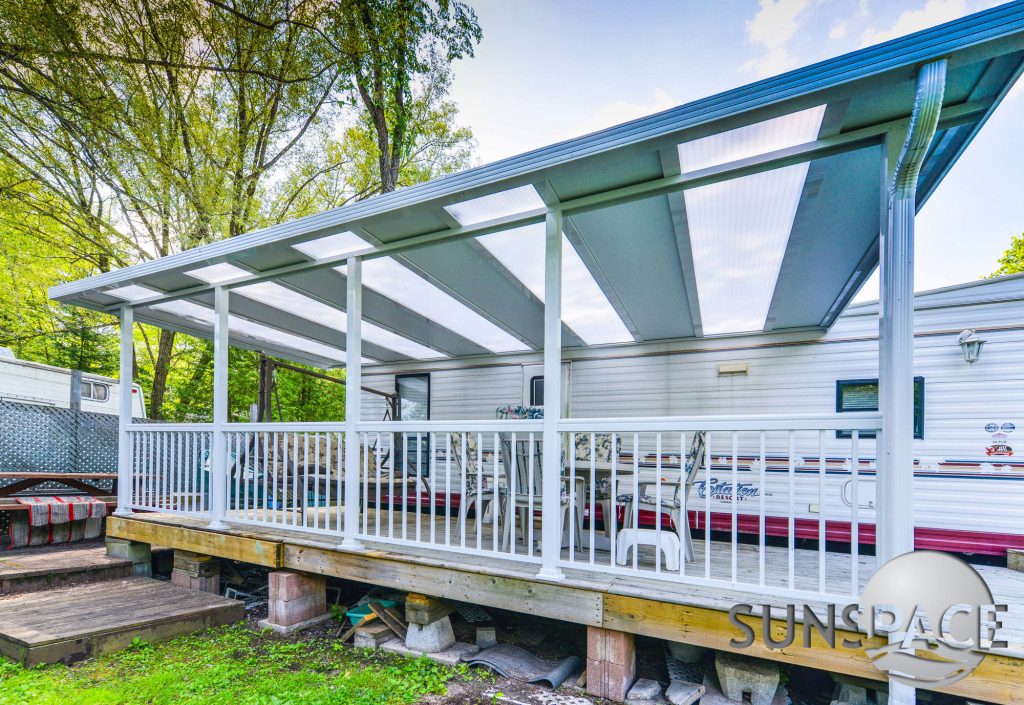
A hybrid patio cover combines solid insulated panels with acrylic sections in a single roofline. You get defined shaded zones alongside light-filled areas, which works really well for larger patios or L-shaped spaces where part of the patio needs full shade and another part benefits from natural light.
Best for:
- Larger patios with multiple use zones
- Homeowners who can’t decide between full shade and natural light (a very common situation)
- Spaces that host gatherings where some people want sun, and others don’t
Hybrid covers are often the most visually interesting option, too. The alternating panels create a clean, architectural look that reads as intentional design rather than a utility add-on. If you’re also adding features like a louvered pergola for adjustable shade on an adjacent section, a hybrid cover pairs naturally with that kind of layered approach to outdoor comfort.
How to Choose: Four Questions Worth Asking
Before you settle on a material, work through these:
- Which direction does your patio face? South and west-facing patios absorb the most heat in Oklahoma. Heatstop acrylic or a solid insulated panel will serve you better than Solar Cool alone.
- How do you actually use the space? Morning coffee drinkers often love acrylic. People who entertain in the evening or want a shaded lounge area tend to prefer solid panels.
- How important is noise during storms? If you plan to spend time under the cover during Oklahoma’s spring storm season, solid panels are noticeably quieter.
- Do you want to add electrical features? Ceiling fans and recessed lighting integrate cleanly into solid and hybrid covers. Acrylic-only covers require more creative solutions for lighting.
Don’t Overlook the Frame and Finish
Every cover type depends on a quality aluminum frame to hold up under Oklahoma wind loads. Color options typically include white, driftwood, bronze, black, and gray, so matching your existing trim or siding isn’t difficult. Aluminum frames are maintenance-free, which matters a lot when you’re comparing them to wood alternatives that need staining every few years.
If you’re combining your patio cover with other outdoor features like Trex decking or railing systems, coordinating the frame color across products keeps
Frequently Asked Questions
Can I install a patio cover myself, or does it need a contractor?
Patio covers involve precise measurements, structural attachment to your home’s fascia or ledger, and sometimes permit requirements depending on your municipality. Professional installation ensures the cover is properly anchored for Oklahoma wind loads and that any penetrations into your home’s exterior are sealed correctly.
How long do acrylic panels last in Oklahoma’s climate?
Quality acrylic panels with UV inhibitors are built to last many years without significant yellowing or brittleness. Cheaper polycarbonate products can degrade faster in high UV environments, so product quality matters. Ask specifically about UV-rated panels when comparing options.
Will a patio cover affect my home’s value?
Generally yes. A professionally installed cover adds usable square footage to your outdoor living space, which buyers notice. A well-matched cover that complements the home’s exterior tends to perform better than a mismatched or DIY installation.
Is a hybrid cover significantly more expensive than a single-material option?
Hybrid covers typically cost more than a straight acrylic or straight solid cover of the same size, but the price difference is often smaller than people expect. Since you’re combining materials in one structure rather than building two separate covers, the per-square-foot cost tends to be reasonable. Get a specific quote based on your patio dimensions for an accurate comparison.
Can I add a patio cover to an existing deck or porch?
Yes, in most cases. The attachment method depends on whether your existing structure can support the load, and whether you need to add a ledger board or posts. A site visit from an installer will confirm what’s structurally feasible for your specific setup. The whole space looks intentional rather than pieced together.
Ready to Figure Out Which Cover Fits Your Patio?
There’s no single right answer here. The best cover depends on how your patio is oriented, how you use it, and what Oklahoma weather throws at it most. A quick conversation with someone who’s installed these in this climate is worth a lot more than scrolling through spec sheets. Sunspace by Express Sunrooms of Oklahoma has been helping Oklahoma homeowners make this exact decision for years. Reach out to talk through your options with a local specialist who knows what works here.